
How to Quit Zyn & Nicotine Pouches: Taper Plan That Sticks
By Todd Lahman · · Updated
To quit Zyn and other nicotine pouches, many people use a taper: they cut how many pouches they use and how strong they are in small, scheduled steps over a few weeks, instead of stopping all at once. Truth Initiative suggests that people on 6 mg or 9 mg pouches move to 3 mg pouches (Truth Initiative). Some people do fine stopping outright, and the choice is yours. Here's a step-by-step taper plan, what to do when a craving hits, what withdrawal looks like, and where to get free help.
Why are nicotine pouches hard to quit?
Pouches contain nicotine, and the FDA calls nicotine "a highly addictive chemical compound" that "keeps people using tobacco products, even when they want to stop" (FDA). Truth Initiative adds that pouches "can contain high concentrations of nicotine, which can make quitting more challenging" (Truth Initiative).
Zyn is authorized for sale in the US: in January 2025 the FDA authorized the marketing of 20 Zyn products in 3 mg and 6 mg strengths, the first nicotine pouches it had authorized. The FDA was clear that this "does not mean these tobacco products are safe, nor are they 'FDA approved'" (FDA). And no pouch has been approved as a tool for quitting nicotine (Truth Initiative).
Step 1: Know your baseline
Before you change anything, count for two or three days: how many pouches a day, what strength, and when. The moments matter as much as the total. Smokefree.gov describes a trigger as "something that makes you want to smoke", such as a stressful situation, coffee or a party, and suggests planning for your triggers before you quit (Smokefree.gov). For pouches, common ones are the first pouch of the morning, after meals, driving and work stress.
Log every pouch honestly, including the ones you'd rather not count. You can't pace what you haven't measured, and a one-tap log makes it painless.
Step 2: Pick your taper - count, strength, or both
There are two levers, and many people use both:
- Strength: step down the milligrams. Truth Initiative suggests moving from 6 mg or 9 mg to 3 mg "to ease into quitting and minimize withdrawal symptoms" (Truth Initiative).
- Count: drop one or two pouches a day each week, until you reach zero.
Here's one example for someone starting at 12 pouches a day at 6 mg. It's an illustration, not a prescription: build yours from your own baseline.
| Week | Pouches a day | Strength | |---|---|---| | 1 | 12 | 3 mg | | 2 | 10 | 3 mg | | 3 | 8 | 3 mg | | 4 | 6 | 3 mg | | 5 | 4 | 3 mg | | 6 | 2 | 3 mg | | 7 | 0 | none |
Truth Initiative also suggests "mini-quits": skipping a pouch you would normally have, to build confidence (Truth Initiative).
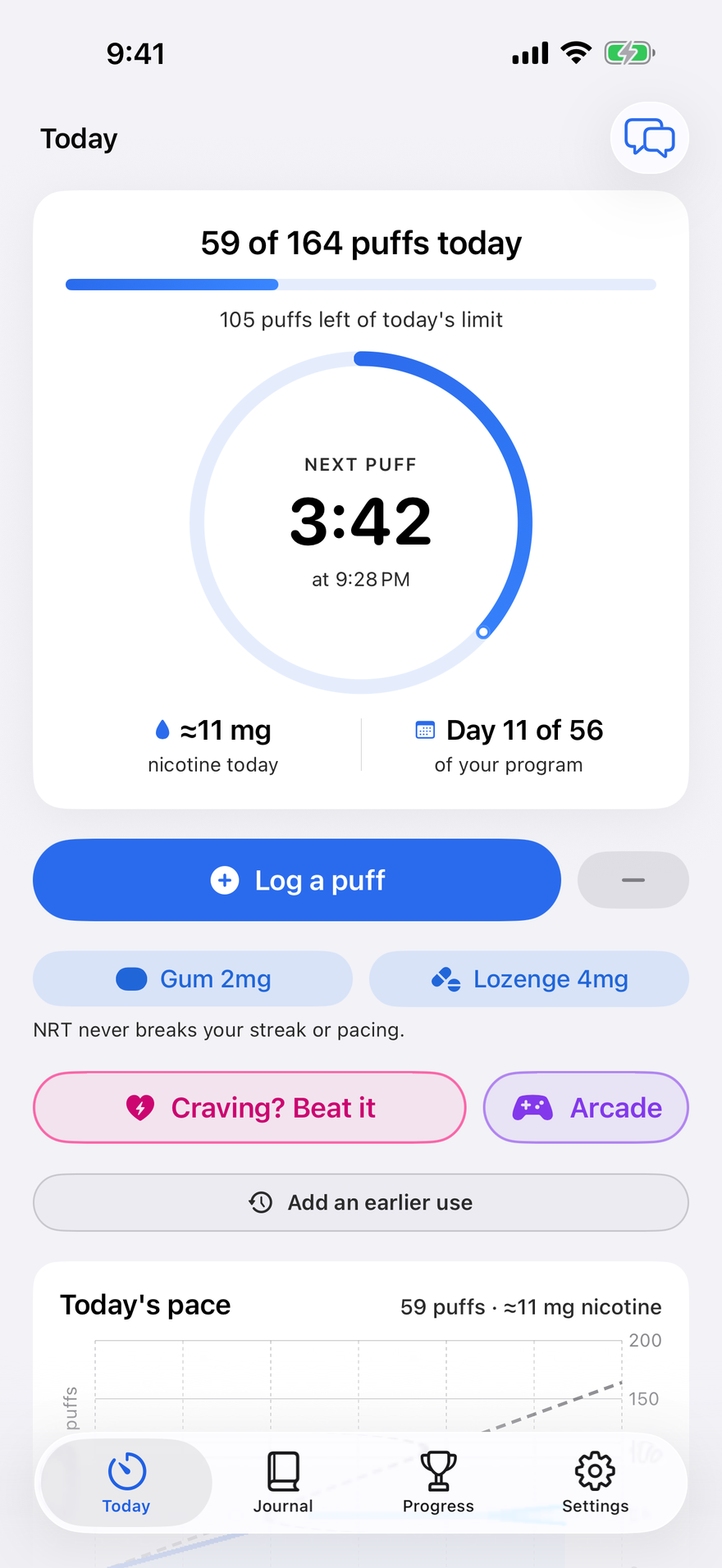
Stretching the time between pouches is what makes a count taper work day to day. That's the "pacing" in Puff Pacer's pacing countdown: the app spreads your day's allowance across your waking hours and counts down to your next pouch, so the plan lives in the app instead of in your head.
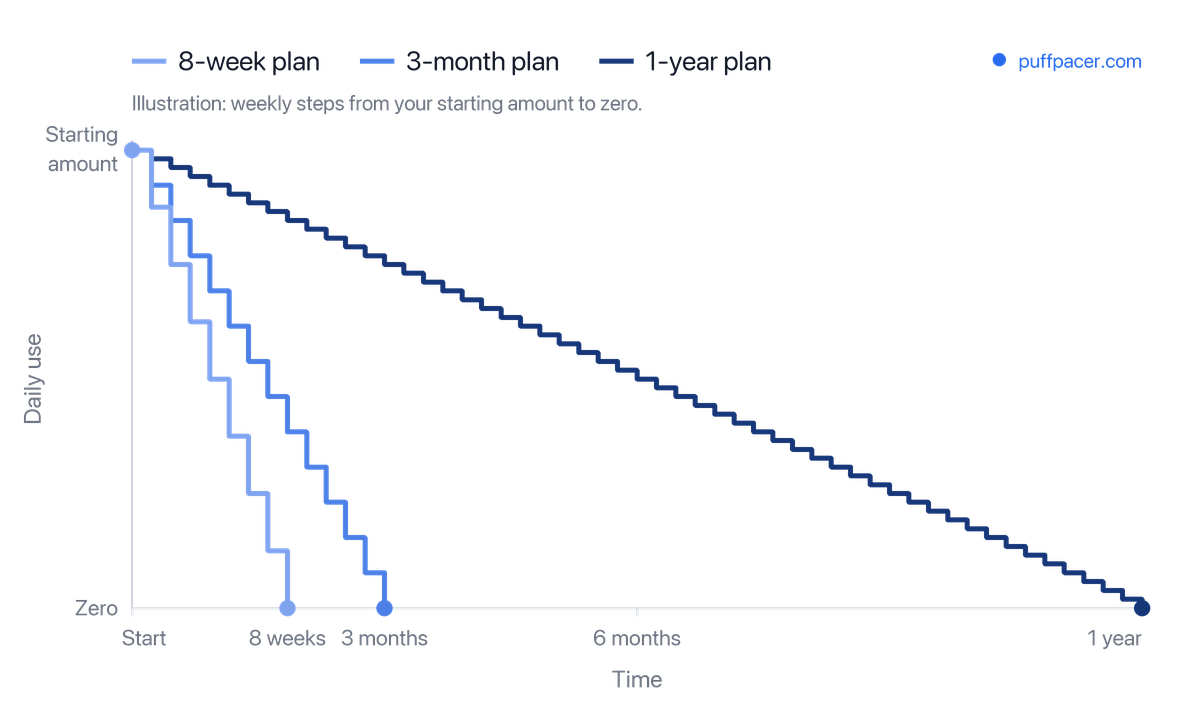
A longer plan makes each step smaller; a shorter one gets you to zero sooner. Pick the length that suits you.
Step 3: Have a plan for each craving
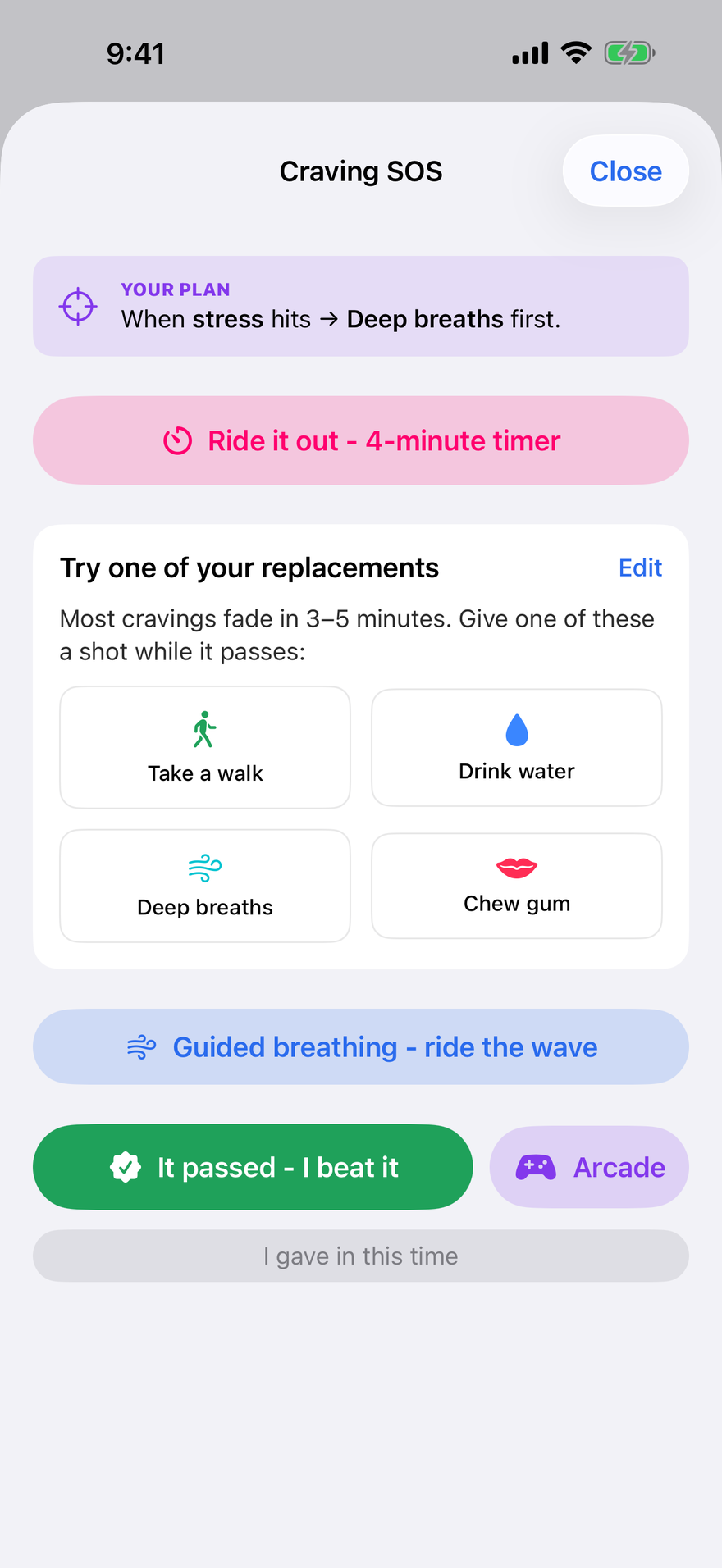
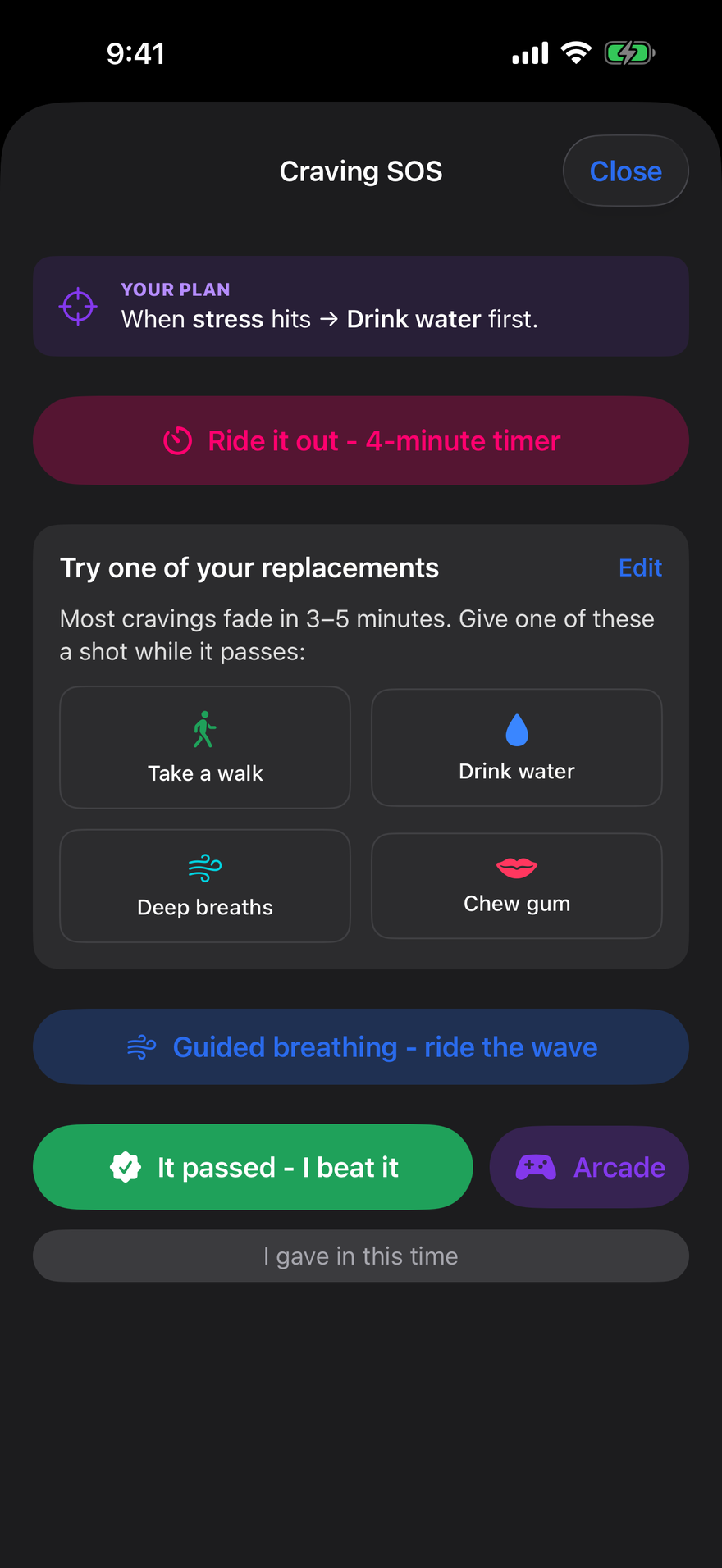
A craving feels urgent, but it passes. Truth Initiative notes that many people exercise, walk, do a few chores, call a friend or practice a hobby, "and in five minutes, the craving passes" (Truth Initiative).
Pouches keep your mouth busy, which is half the habit, so have a nicotine-free swap ready. Smokefree.gov suggests gum, hard candy or more water, switching to a different activity, a walk, or slow breaths: in through your nose and out through your mouth, 10 times or until you feel more relaxed (Smokefree.gov).
Write your plan for your top two or three triggers before they happen, for example: "after lunch: walk around the block, then gum".
Step 4: Know what withdrawal looks like
Withdrawal symptoms are usually strongest in the first days or weeks, and they get weaker over time. The worst of them last a few days to a couple of weeks (Smokefree.gov). A taper spreads your steps out, but expect some uncomfortable days, especially right after a step down.
If you slip, log it and pick the plan back up. A slip tells you which moment needs a better plan; it doesn't erase the days you've already done.
Step 5: Get free help
You don't have to do this alone:
- A quitline. In the US, the CDC lists free, confidential coaching through 1-800-QUIT-NOW, where a coach can help you make a quit plan (CDC). Outside the US, ask your doctor or pharmacist about your local quitline.
- Nicotine replacement products. Gum and lozenges are different from pouches: they are medications approved and regulated by the FDA, while pouches are not (Truth Initiative). Ask a pharmacist or doctor whether they fit you. If you use them, Puff Pacer can log them alongside your pouches.
Step 6: Track the wins, not just the pouches
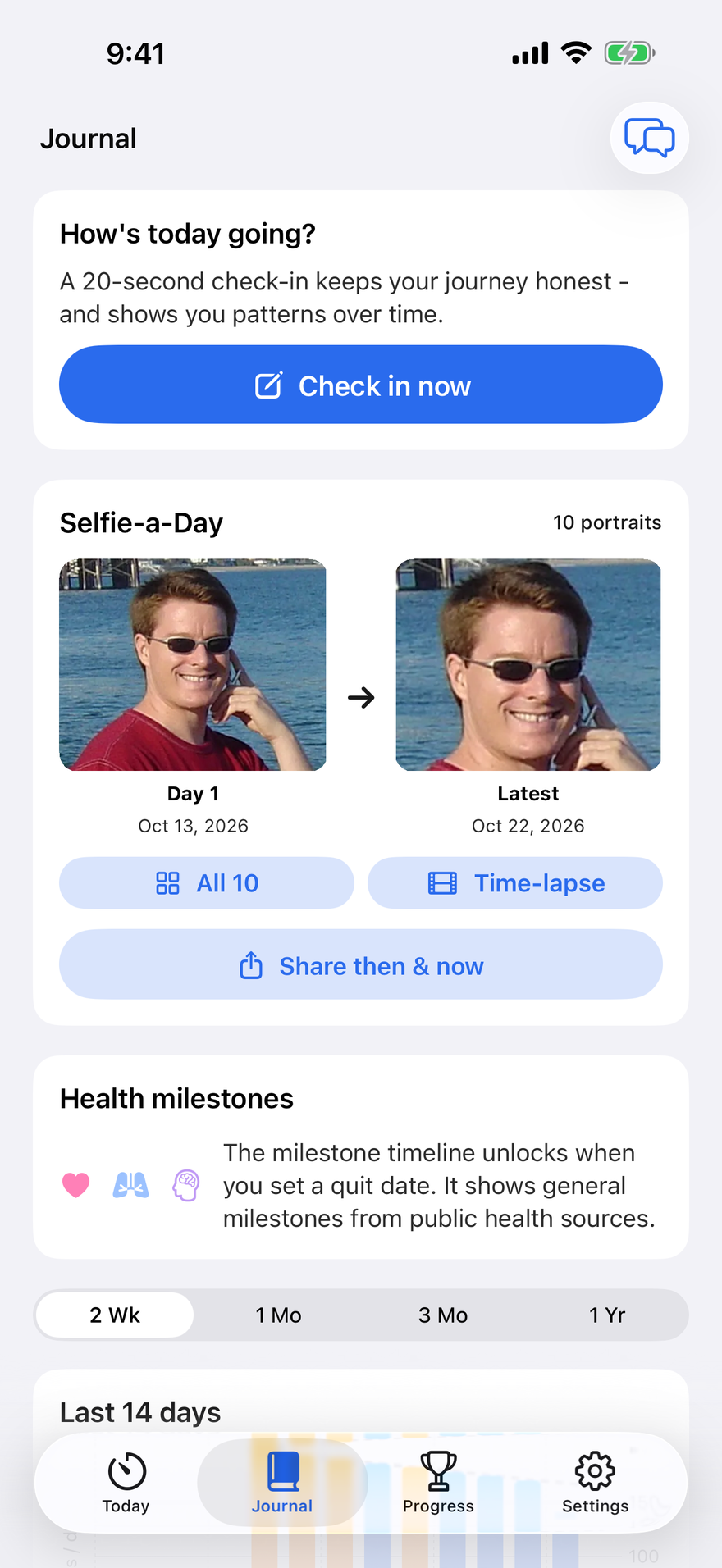
Money not spent, days on plan, gaps held past your pace, and the general health milestones you pass along the way. Watching those add up helps on the days motivation runs low. A 20-second daily check-in (mood against cravings) also shows your own pattern: you may find your cravings cluster around a few specific triggers, and that's where your replacements go.
What about snus and other pouch brands?
The plan is the same: pouch count and nicotine strength are the levers, whatever the label. Puff Pacer's pouch tracker handles Zyn, snus and any other pouch, alongside vaping, cigarettes and chewing tobacco (dip), so a mixed habit still gets one pace.
Sources
- Truth Initiative, What to know about quitting Zyn, 2026.
- U.S. Food and Drug Administration, FDA Authorizes Marketing of 20 ZYN Nicotine Pouch Products after Extensive Scientific Review, 2025.
- U.S. Food and Drug Administration, Nicotine Is Why Tobacco Products Are Addictive, 2026.
- Smokefree.gov (National Cancer Institute), Know Your Triggers.
- Smokefree.gov (National Cancer Institute), How to Manage Cravings.
- Smokefree.gov (National Cancer Institute), Understanding Withdrawal.
- Centers for Disease Control and Prevention, How to Quit Smoking, 2024.
Frequently asked questions
How long does Zyn withdrawal last?
Withdrawal symptoms are usually strongest in the first days or weeks and get weaker over time; according to Smokefree.gov, the worst of them last a few days to a couple of weeks. A single craving is much shorter: Truth Initiative notes that with something to do, a craving passes in about five minutes. Everyone's different, so talk to a healthcare professional about your plan.
Is it better to quit Zyn cold turkey or taper?
Both can work. Some people, especially light users with a few pouches a day, stop all at once; many heavier users find smaller scheduled steps easier to stick with. A pharmacist or doctor can tell you whether nicotine replacement products suit you.
Should I taper pouch count or strength first?
Many people do both. Truth Initiative suggests moving from 6 mg or 9 mg pouches to 3 mg to ease into quitting, and you can then drop one or two pouches a day each week. The key is a plan that moves in small, scheduled steps instead of relying on in-the-moment willpower, which is what a pacing app automates for you.
Is Zyn approved to help people quit nicotine?
No. In January 2025 the FDA authorized the marketing of 20 Zyn products, the first nicotine pouches it authorized, but it said this does not mean they are safe or FDA approved. Truth Initiative notes that no pouch has been approved as a tool for quitting nicotine, unlike nicotine gum and lozenges.
Where can I get free help to quit nicotine pouches?
In the US, the CDC lists free, confidential coaching through the quitline at 1-800-QUIT-NOW, where a coach can help you make a quit plan. Outside the US, ask your doctor or pharmacist about your local quitline. A pharmacist can also tell you whether nicotine gum or lozenges fit you.
Ready to quit at your pace?
Download Puff Pacer free and get a personalized taper plan for vaping, smoking, nicotine pouches, or chewing tobacco.


Disclaimers
Not medical advice. This article is for general information and education only. It is not medical advice and is not a substitute for advice, diagnosis or treatment from a doctor, pharmacist or other qualified healthcare professional. Talk to one before changing how you use nicotine or starting nicotine replacement products, especially if you are pregnant or breastfeeding, have a health condition or take medication. Reading this article does not create a doctor-patient relationship. In a medical emergency, call your local emergency number.
About the app. Puff Pacer is for building healthier habits and general wellbeing. It is not a medical device and is not intended to diagnose, treat or prevent any disease, including nicotine dependence. It is not medical advice: talk to a healthcare professional. Puff Pacer is for adults 18 and older.
Accuracy. We link our sources so you can check them. Health guidance changes over time, and this article reflects its sources as of its last update. It may not cover every situation.
Disclosure. The author, Todd Lahman, is the developer of Puff Pacer, the app mentioned in this article, and this site is published by Todd Lahman LLC. No one paid for this article, and it contains no affiliate links.
Trademarks and links. Zyn and other product names mentioned are trademarks of their respective owners, used only to describe their products. Puff Pacer is not affiliated with or endorsed by them. Links to other websites are for reference, and we don't control their content.
Use of this site is subject to our Terms of Use and Privacy Policy.